
Yardrail’s Inaugural Run
This week, Yardrail made its inaugural run.
We brought the first production release of the platform online and began the next, more important phase: moving real work onto it with our initial design partners.
It is a meaningful milestone for our small team. It is also very deliberately a beginning.
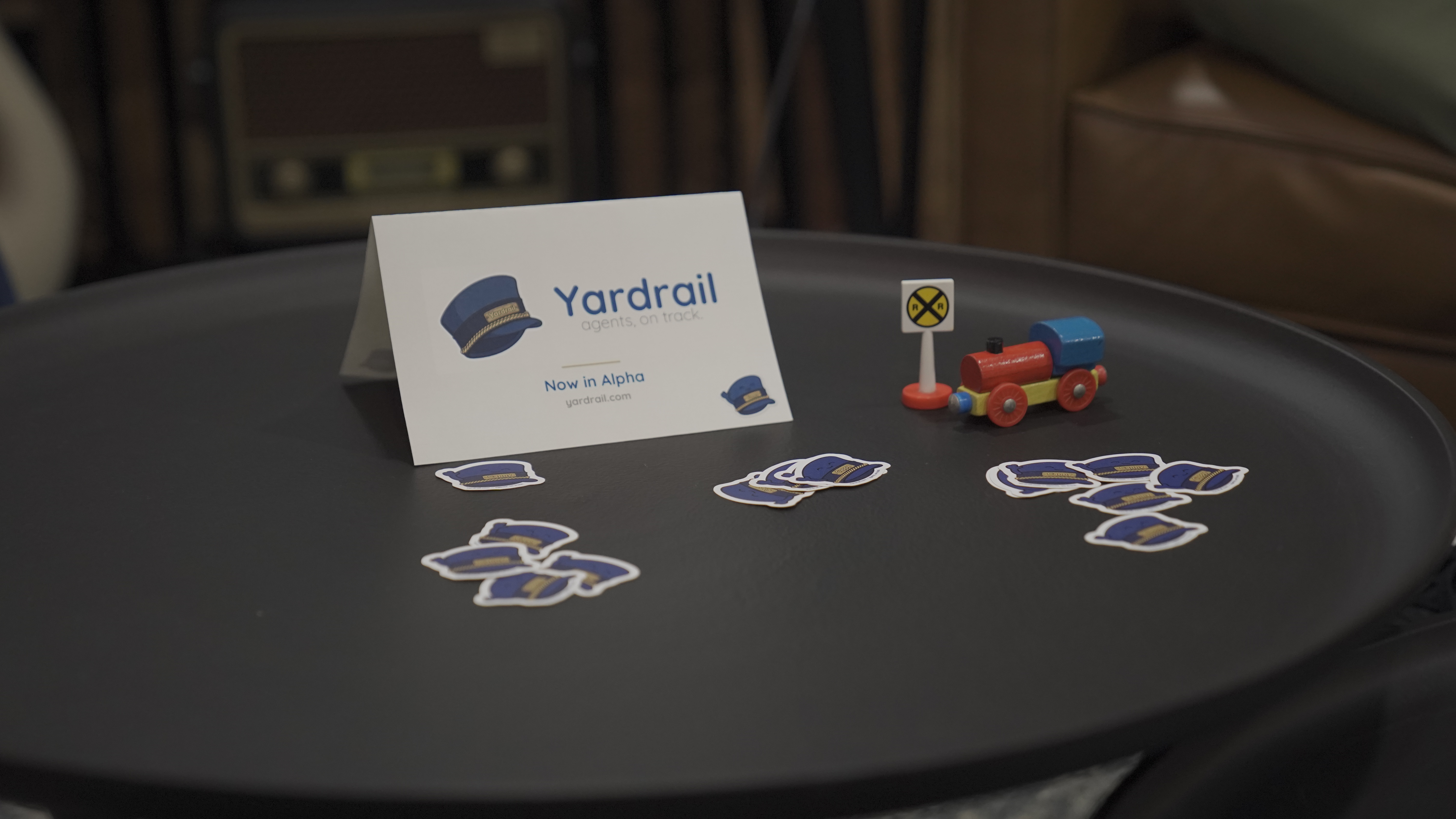
The first stretch of track
Yardrail exists because small businesses are asked to carry too much administrative work between disconnected tools. Email does not quite talk to the calendar. The booking form does not quite update the customer record. The accounting system has the numbers, but someone still has to turn them into a report.
The software is present. The connections are not. A person ends up holding the whole process together.
Over the past several months, we have been building the foundation for Yardrail to carry that work instead: a place where dependable workflows can run across the systems a business already uses, without asking the owner to become an automation engineer.
This release is the first version of that foundation running in production.
Built alongside real businesses
We did not want to design Yardrail around imaginary companies with perfectly organized data and tidy software stacks. Those companies are difficult to find in the wild.
Instead, we have been working alongside small teams doing the real thing: serving customers, organizing events, managing contacts, coordinating schedules, preparing reports, and expanding into new locations—all while keeping daily operations moving.
The details vary, but the patterns repeat. Information gets copied between systems. Follow-ups depend on someone remembering. Reports are rebuilt by hand. Scheduling takes a surprising number of emails. Important knowledge lives in one person’s head.
Those patterns are shaping Yardrail. Our first design partners have helped us understand not only what to automate, but where a person should remain involved and what it takes for a workflow to earn trust.
What this release makes possible
The inaugural run is not a claim that every planned workflow is complete or that anyone can sign up and automate a business in an afternoon.
It means the core system is now in place for us to begin the useful work:
- bringing our first design-partner workflows onto Yardrail;
- connecting the systems those workflows depend on;
- running them against real operational needs;
- learning where the experience is clear and where it still creates friction;
- improving reliability with every run. Until now, much of the work has been about building the railway. From here, we get to learn from the trains.
What we have learned already
A few principles have become clearer on the way here.
Small businesses do not need another complicated tool. They need work removed from the plate. The infrastructure should stay in the background.
The best workflows are reusable without being rigid. Scheduling, reporting, customer follow-up, and record-keeping share common shapes, even when the businesses using them look very different.
Automation should not erase accountability. Machines can move information, handle repetition, and help make sense of messy inputs. People should still approve the consequential things.
The unglamorous work matters. Permissions, connectors, inconsistent data, and unusual edge cases are not distractions from the product. Solving them is the product.
The next stop
Our next step is to bring the first design-partner workflows aboard, observe how they perform, and keep improving the system around what we learn.
From there, we will prepare for our first broader boarding group: a small set of businesses willing to help us test Yardrail against more tools, more workflows, and more varieties of operational mess.
We are taking that expansion carefully. The aim is not to put more software in front of small-business owners. It is to make the software they already have work better together—and to give them back some of the time currently lost between systems.
For now, we are grateful to our design partners, collaborators, and early supporters for helping us reach the platform.
The first train is moving. There is plenty of track left to lay.